
Protection between paving jobs
Sealcoating in Grand Rapids, MI
A thin coat on schedule keeps sun, salt and water from wearing your asphalt down.
- Free on-site estimates
- Base depth and asphalt thickness written into every quote
- Permit questions sorted out before work is scheduled
What Sealcoating Does and Does Not Do
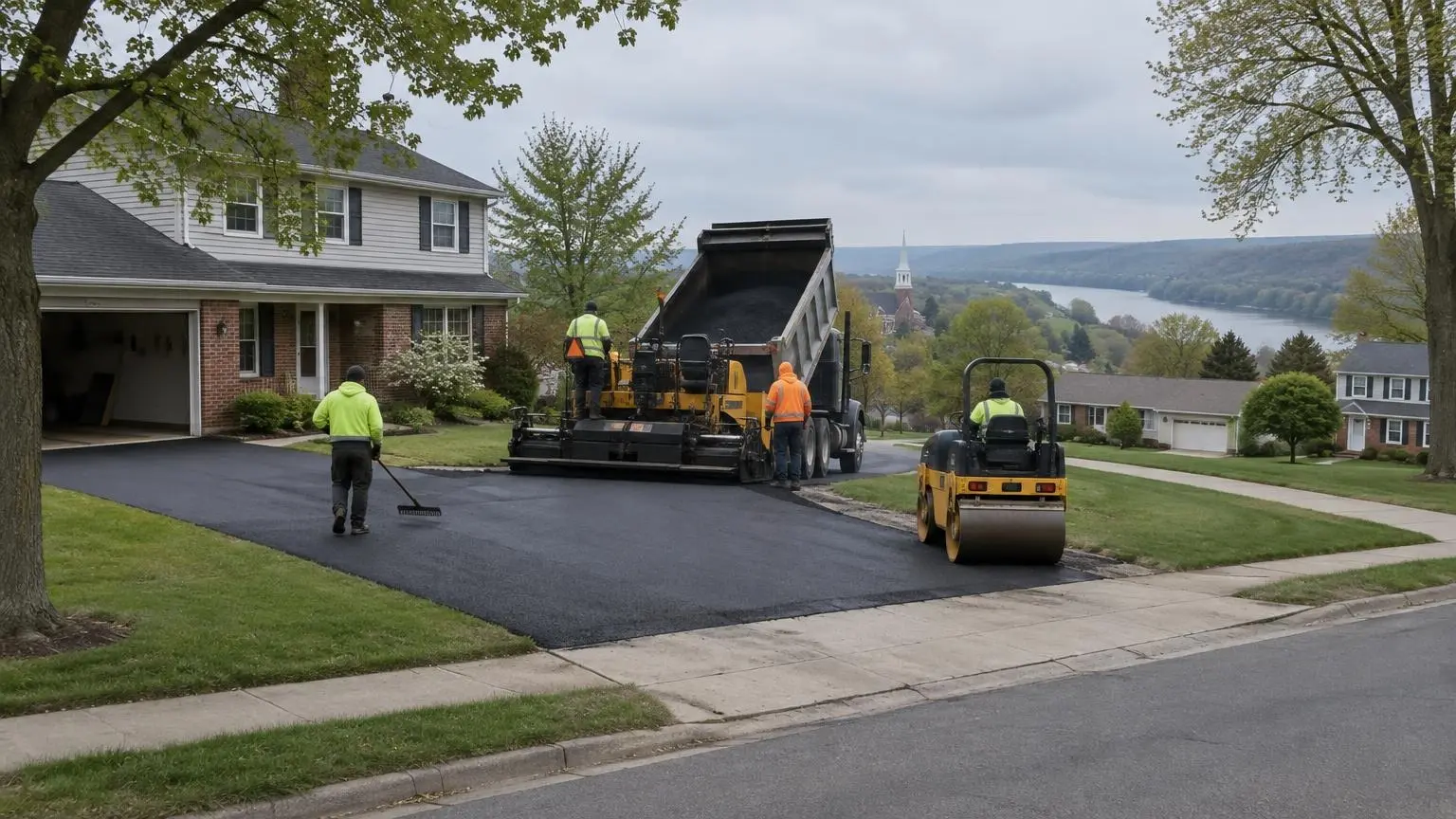
Sealcoating is a liquid coating spread over asphalt to protect the binder that holds the stone together. Sun and air dry that binder out over time; you can see it as the surface fades from black to gray and the small stones start to loosen. In Grand Rapids, salt brine, oil drips and months of meltwater add to the wear. A sealcoat slows all of that down and tightens up the look of the driveway. What it does not do is fill real cracks or fix a weak base, so it is one part of a maintenance plan, not a repair.
When to seal
HomeGuide recommends letting new asphalt cure for 3 to 6 months before sealing, and its driveway guide suggests sealing after about the first year. After that, resealing every few years is common; the interval stretches from 2 to 10 years depending on the product, sun exposure and traffic. Signs it is time: the surface has gone gray, water soaks in instead of beading, or the fine aggregate is starting to wear away in the tire paths.
Weather window
Sealer needs dry pavement and air temperatures between about 50 and 95 degrees, and HomeGuide lists 12 to 72 hours before you drive on it. In West Michigan that means late spring through early fall, picking days without rain in the forecast. Shaded driveways under big maples dry more slowly, so we plan those for warm, breezy days.
How we apply it
- Blow off and clean the surface; scrape out grass at the edges
- Treat oil spots so the sealer bonds
- Fill cracks first, so the coat does not just bridge over them
- Edge by hand along the garage, walks and lawn
- Apply an even coat to the field and keep traffic off until it cures
Barricades or tape go up at the end of the driveway so nobody drives on it early.
Sealer types
HomeGuide notes two common emulsions. Coal tar sealer resists gas and oil stains but has been restricted in many areas over health and environmental concerns. Asphalt-based emulsions are considered more environmentally friendly but stain more easily from gas and oil. We talk through which product we use and why at the estimate.
Commercial lots
For parking lots, HomeAdvisor's cost guide lists sealcoating at about $0.15 to $0.30 per square foot. Lots are usually sealed in sections or after hours so a business can stay open, and restriping follows once the sealer has cured, since fresh black sealer makes new lines stand out.
What Sealcoating Covers
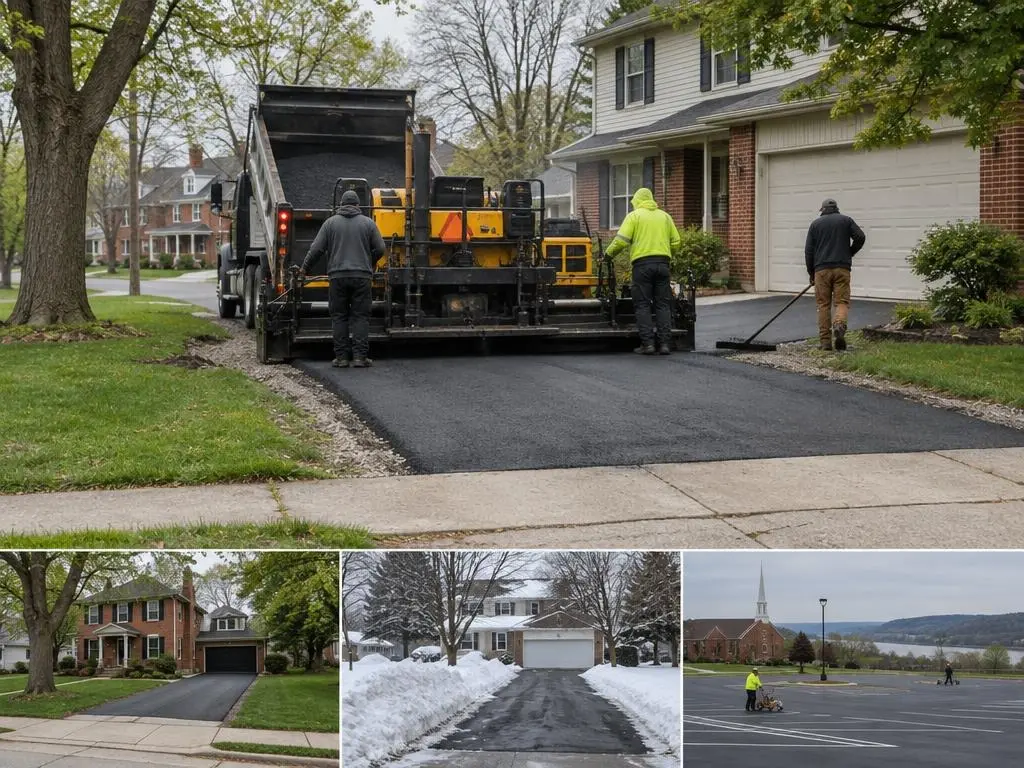
A good seal job is mostly preparation.
Surface cleaning
Debris, dirt and edge grass removed so sealer bonds to the asphalt.
Oil spot treatment
Stains primed so the coat does not peel over them.
Crack filling before sealing
Open cracks filled first; sealer alone does not keep water out of them.
Even application
Hand-edged borders and a uniform coat across the field.
Typical Sealcoating Costs
| Item | Published national range |
|---|---|
| Driveway sealing, installed (HomeGuide) | $1 to $2 per sq ft |
| Two-car driveway, 400 sq ft (HomeGuide) | $400 to $800 |
| Two-car driveway, 576 sq ft (HomeGuide) | $580 to $1,200 |
| Three-car driveway, 864 sq ft (HomeGuide) | $860 to $1,700 |
| National average job (HomeGuide) | About $600 |
| Parking lot sealcoating (HomeAdvisor) | $0.15 to $0.30 per sq ft |
National ranges. Crack prep, oil spots, the number of coats and minimum job charges affect the total. The written estimate sets the price.
How It Works
1. Look and measure
We check the surface, cracks and oil spots and measure the area.
2. Schedule the weather
A dry day in the right temperature range is booked.
3. Prep and fill
Cleaning, edging, oil treatment and crack filling.
4. Seal and close off
Coat applied, driveway taped off, and you get a time to drive on it.
Sealcoating Questions
How often should a Grand Rapids driveway be sealcoated?
Every few years is typical. HomeGuide gives a range of 2 to 10 years depending on the sealer and conditions. Driveways in full sun, with heavy use or lots of salt exposure tend to need it sooner.
Can sealcoating fix cracks?
No. Sealer is a thin coating. Cracks need to be filled or sealed first, or water will keep getting in under the new coat.
How soon can I drive on a freshly sealed driveway?
Plan on 12 to 72 hours, per HomeGuide, with shade and humidity on the long end. You can usually walk on it after a few hours. We give you a time when we finish.
Can you sealcoat in the fall?
Yes, on warm, dry days. Once nights regularly drop toward freezing and days stay below about 50 degrees, sealer does not cure well and it is better to wait for spring.
Sealcoating Service Areas
- Asphalt Paving in Grand Rapids, MI
- Asphalt Paving in Wyoming, MI
- Asphalt Paving in Kentwood, MI
- Asphalt Paving in Walker, MI
- Asphalt Paving in Grandville, MI
- Asphalt Paving in East Grand Rapids, MI
- Asphalt Paving in Rockford, MI
- Asphalt Paving in Cedar Springs, MI
- Asphalt Paving in Lowell, MI
- Asphalt Paving in Sparta, MI
- Asphalt Paving in Comstock Park, MI
- Asphalt Paving in Plainfield Township, MI
- Asphalt Paving in Alpine Township, MI
- Asphalt Paving in Ada Township, MI
- Asphalt Paving in Cascade Township, MI
- Asphalt Paving in Byron Center, MI
- Asphalt Paving in Caledonia, MI
- Asphalt Paving in Gaines Township, MI
- Asphalt Paving in Hudsonville, MI
- Asphalt Paving in Jenison, MI
- Asphalt Paving in Allendale, MI
- Asphalt Paving in Holland, MI
- Asphalt Paving in Coopersville, MI
Get a Sealcoating Estimate
Book a sealcoating estimate for your Grand Rapids driveway or lot.